Key takeaways
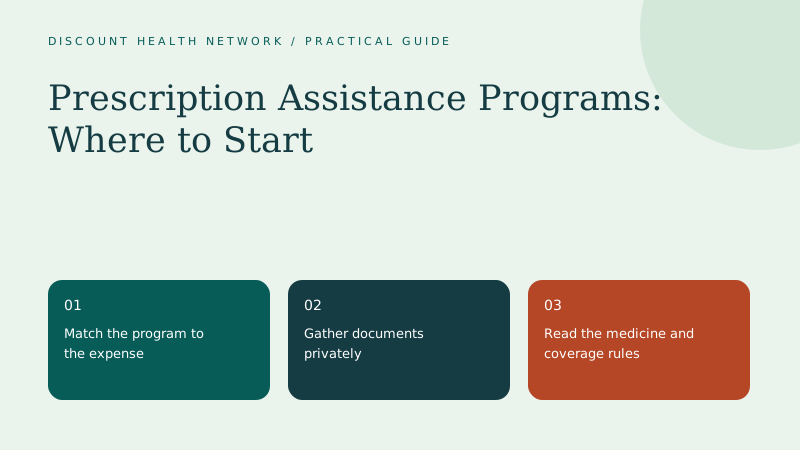
- Match the program to the expense.
- Gather documents privately.
- Read the medicine and coverage rules.
Match the program to the expense
Some resources help uninsured applicants obtain medication; others help eligible insured people with specific expenses. A discount card is a different arrangement from a patient assistance program. Identify whether you need help with the medicine price, insurance cost sharing, transportation, or another expense before choosing where to apply.
Gather documents privately
Programs may request household and financial information, insurance details, or a prescriber’s participation. Use the organization’s official instructions and secure application channel. Do not upload these records to a public resource directory or include them in a general contact form. Make a checklist of what the actual program requires.
Read the medicine and coverage rules
A familiar company name does not mean every product is included. Confirm the exact medication, dosage form, enrollment period, coverage restrictions, and current program status. If you have Medicare or another government program, check the specific restrictions instead of assuming a commercial savings offer applies.
Expect funding and applications to change
Disease-specific funds may open, close, or maintain waiting lists. A directory entry is a starting point rather than a funding reservation. Keep a dated record of the program’s response and ask how to receive official updates. Never pay someone who promises approval merely because they claim to know a program insider.
Coordinate with your care team
Ask whether your clinic has a financial navigator or staff member who handles assistance forms. Tell them the refill date and any application deadline. If you are running out, discuss safe continuity options with a qualified clinician. Do not ration, split, or stop medication because an application is pending.
Track renewal from the beginning
Save the approval notice, enrollment dates, and the exact next step for reapplying. Put a reminder well before renewal, using the program’s timetable. Report required changes through its official process. Recheck your actual bill after assistance starts and ask the program about anything you do not understand.
Turn this into one useful conversation
Start with the organization responsible for the service or benefit. Explain the financial question clearly without sending unnecessary medical details. Ask for the actual price or rule that applies to your situation, what the answer excludes, and the next action you need to take. If a response is unclear, ask the staff member to explain it in ordinary language and point you to the written policy.
Keep a private record with the date, organization, contact person or reference number, question, response, and follow-up date. A website description can help you prepare, but the responsible provider, program, or plan must confirm the details. When comparing two options, use the same service, time period, and assumptions so the totals mean the same thing.
Make the numbers work together
Put any recurring cost into your health budget and set aside a separate monthly amount for known occasional expenses. Avoid counting the same expense twice: an annual bill entered in the annual-expense field should not also appear as a monthly payment unless those are genuinely separate costs. Keep savings reserves separate from actual care spending. A potential discount becomes verified savings only after you confirm the final price for an equivalent need.
Try this today
Choose one question from this guide. Write the current cost or unresolved issue, the organization you will contact, and the date you will follow up. Finishing that step is more valuable than collecting another unverified offer.
Your next three steps
- Review the official source below and choose one question to resolve.
- Contact the responsible organization to confirm the answer for your circumstances.
- Record the result and update your budget, comparison, or care plan as appropriate.
Frequently asked questions
Does this guide determine what I qualify for?
No. Eligibility, coverage, prices, and availability must be confirmed by the responsible program, plan, or provider.
Should I delay care while looking for a lower price?
Do not delay emergency care. Ask a qualified clinician about the timing of nonemergency care and discuss affordability problems before changing prescribed treatment.
Sources and scope
RxAssist ↗ provides the official or program starting point for this topic. Source pages checked October 22, 2026. This article provides general financial-navigation information, not a determination of individual benefits, legal rights, tax treatment, or medical suitability.
Prepared by Discount Health Network editorial resources. No independent medical review is claimed. Read our editorial standards.