
Key takeaways
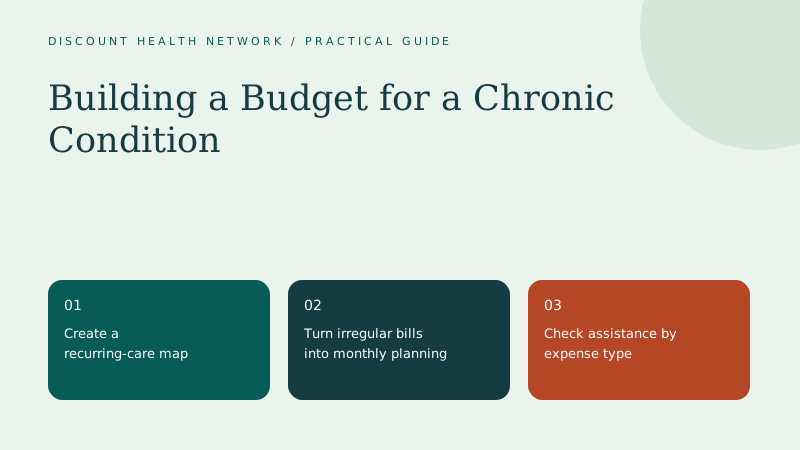
- Create a recurring-care map.
- Turn irregular bills into monthly planning.
- Check assistance by expense type.
Create a recurring-care map
Privately list medications, appointments, monitoring, supplies, equipment, and travel. Use the care plan developed with your clinicians. Include the expected timing of each expense rather than placing everything into one broad medical category.
Turn irregular bills into monthly planning
Divide a known annual expense by twelve or a quarterly expense by three. Keep the actual payment date visible so the reserve is ready in time. Do not count the reserve contribution and the later payment as two separate expenses in the same annual spending total.
Check assistance by expense type
Disease-specific funds and other programs may cover particular costs under current rules. Confirm the condition, insurance, income, and other criteria directly with the program. Funding can change, so keep a backup plan and do not treat a pending application as approved income.
Discuss affordability with the care team
Tell your clinicians which expenses are becoming difficult. Ask about appropriate alternatives, scheduling, and assistance navigation. Do not reduce prescribed treatment, stretch supplies unsafely, or skip monitoring because a budget worksheet suggests a lower number.
Track renewals and transitions
Coverage changes, assistance renewals, equipment replacement, and benefit-year resets can affect cash flow. Keep dates and required actions in a private calendar. Ask programs how changes in income or insurance must be reported.
Review actual results monthly
Compare planned and actual spending without judging yourself for medically necessary changes. Update the plan when care needs change and record why a large variance occurred. A budget is a way to prepare and communicate, not a substitute for individualized medical advice.
Turn this into one useful conversation
Start with the organization responsible for the service or benefit. Explain the financial question clearly without sending unnecessary medical details. Ask for the actual price or rule that applies to your situation, what the answer excludes, and the next action you need to take. If a response is unclear, ask the staff member to explain it in ordinary language and point you to the written policy.
Keep a private record with the date, organization, contact person or reference number, question, response, and follow-up date. A website description can help you prepare, but the responsible provider, program, or plan must confirm the details. When comparing two options, use the same service, time period, and assumptions so the totals mean the same thing.
Make the numbers work together
Put any recurring cost into your health budget and set aside a separate monthly amount for known occasional expenses. Avoid counting the same expense twice: an annual bill entered in the annual-expense field should not also appear as a monthly payment unless those are genuinely separate costs. Keep savings reserves separate from actual care spending. A potential discount becomes verified savings only after you confirm the final price for an equivalent need.
Try this today
Choose one question from this guide. Write the current cost or unresolved issue, the organization you will contact, and the date you will follow up. Finishing that step is more valuable than collecting another unverified offer.
Your next three steps
- Review the official source below and choose one question to resolve.
- Contact the responsible organization to confirm the answer for your circumstances.
- Record the result and update your budget, comparison, or care plan as appropriate.
Frequently asked questions
Does this guide determine what I qualify for?
No. Eligibility, coverage, prices, and availability must be confirmed by the responsible program, plan, or provider.
Should I delay care while looking for a lower price?
Do not delay emergency care. Ask a qualified clinician about the timing of nonemergency care and discuss affordability problems before changing prescribed treatment.
Sources and scope
HealthWell Foundation ↗ provides the official or program starting point for this topic. Source pages checked October 22, 2026. This article provides general financial-navigation information, not a determination of individual benefits, legal rights, tax treatment, or medical suitability.
Prepared by Discount Health Network editorial resources. No independent medical review is claimed. Read our editorial standards.